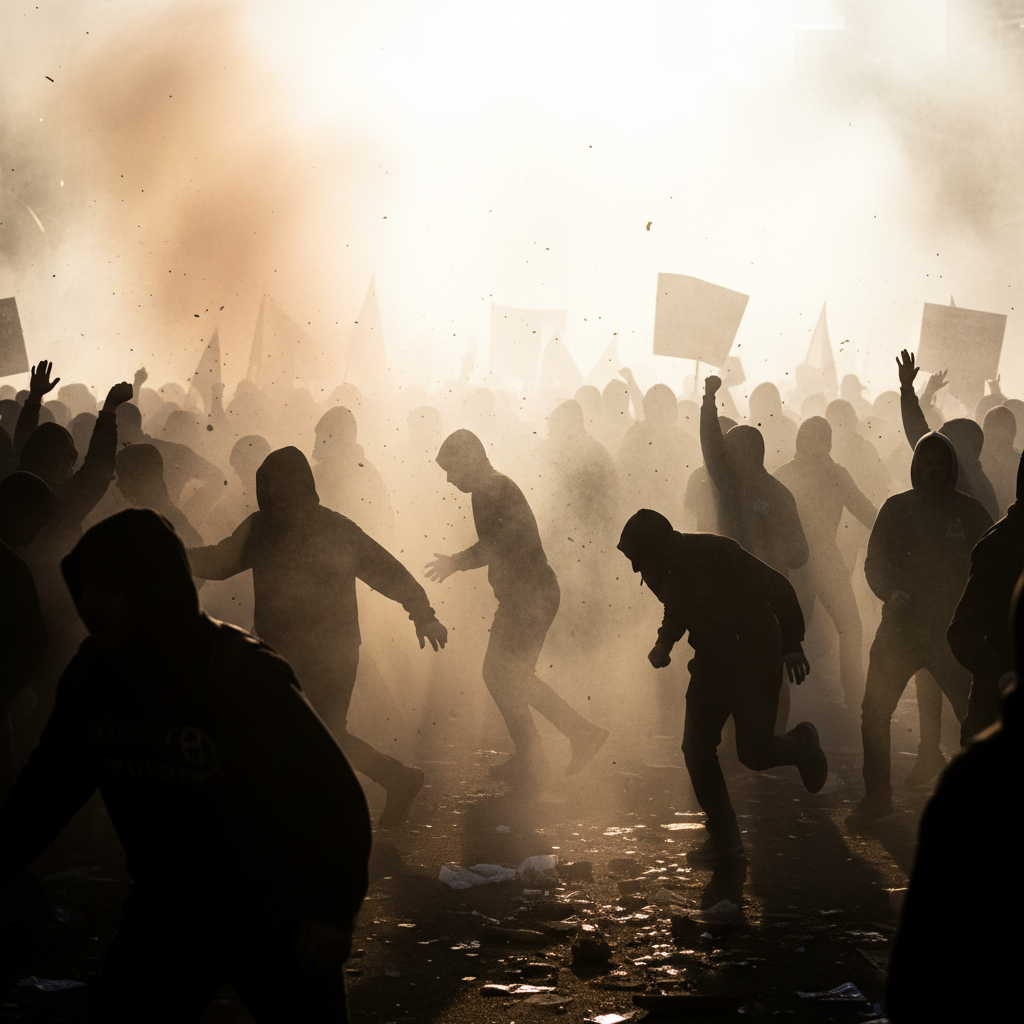
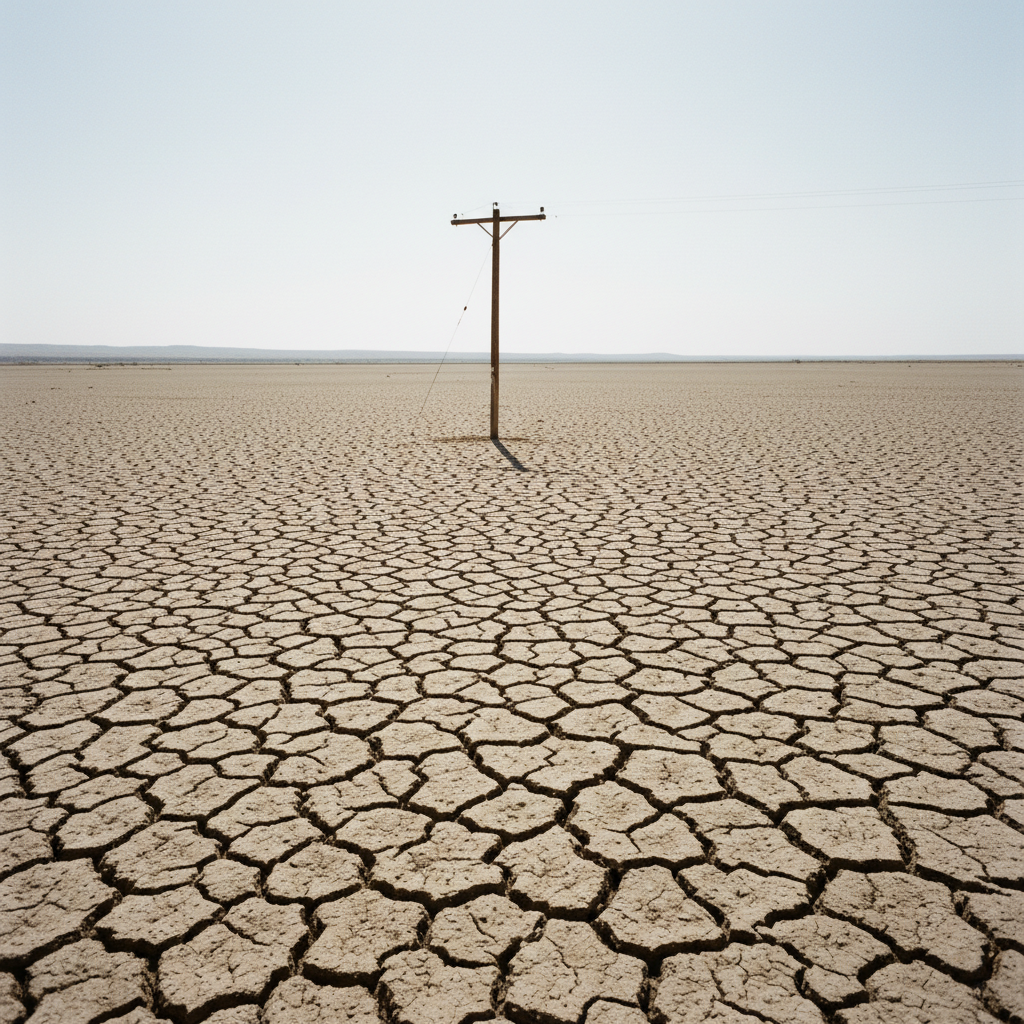
Hover to examine. Click to read. Every frame a decision.
The Atlantic
ClimateAccountability
The Last Water: Inside Arizona's Unspoken Drought Crisis
In the summer of 2024, the Colorado River reached an elevation below which the federal government had never planned for. The engineers had a name for it. They called it Tier Zero. No one was supposed to see it.
For eight months, this reporter traveled the lower basin — from the reservation communities in Arizona who had been promised water rights for a century, to the municipal utility directors in Las Vegas who spoke with the calm certainty of people who had been quietly preparing for this moment for years. The story that emerged was not one of natural disaster. It was one of deliberate delay.
"They knew in 2019. Every model showed the same trajectory. The decision to not tell the public was a decision made in conference rooms by people whose names appear in no press release."
Whistleblower at Gate 7: How a Single FAA Inspector Changed Aviation Safety
Diane Reyes filed her first complaint in October 2021. She filed her forty-third in April 2024. The agency did not act on any of them. Three months later, the incident at O'Hare happened.
Through 14 months of interviews and 3,000 pages of internal FAA documents obtained through FOIA, we reconstructed the institutional process by which a regulator learns to not see. Reyes's story is not an anomaly. It is the system working as it was quietly redesigned to work after 2017.
"Every complaint had a tracking number. Every tracking number had a status. Every status said: under review. Nothing was ever under review."
Whistleblower at Gate 7: How a Single FAA Inspector Changed Aviation Safety
Diane Reyes filed her first complaint in October 2021. She filed her forty-third in April 2024. The agency did not act on any of them. Three months later, the incident at O'Hare happened.
Through 14 months of interviews and 3,000 pages of internal FAA documents obtained through FOIA, we reconstructed the institutional process by which a regulator learns to not see. Reyes's story is not an anomaly. It is the system working as it was quietly redesigned to work after 2017.
"Every complaint had a tracking number. Every tracking number had a status. Every status said: under review. Nothing was ever under review."
Generation Conscript: The Young Men Disappearing into Russia's War Machine
They leave on Tuesdays. That is what the mothers in Bryansk have noticed. The buses come on Tuesdays, and the boys — 19, 20, 21 — are gone by Wednesday. The official notices arrive later, sometimes.
Reporting from three border regions over six weeks, this piece traces the coercive infrastructure of partial mobilization: the local quotas that go unreported in official tallies, the recruiters paid per head, and the families who have learned to recognize the Tuesday buses before they turn onto their street.
"One mother showed me the text message her son sent at 11:42 p.m. the night before he disappeared. It said: I'll call when I can. He had not called."
The Algorithm That Decided Your Bail: Inside Pretrial Risk Assessment
The score is not a sentence. That is what the courts say. In practice, in the 23 jurisdictions we examined, a score above 7 meant you stayed in jail 94% of the time. No one voted for this number.
We obtained the proprietary risk assessment instruments used in six states through public records requests and reverse-engineered their inputs. The results showed that two of the four highest-weighted variables were proxies for race and ZIP code — factors the vendors had explicitly told courts were excluded.
"The judge looked at the number. The number said high risk. She said: I have to follow the tool. I asked who made that rule. She couldn't tell me."
The Algorithm That Decided Your Bail: Inside Pretrial Risk Assessment
The score is not a sentence. That is what the courts say. In practice, in the 23 jurisdictions we examined, a score above 7 meant you stayed in jail 94% of the time. No one voted for this number.
We obtained the proprietary risk assessment instruments used in six states through public records requests and reverse-engineered their inputs. The results showed that two of the four highest-weighted variables were proxies for race and ZIP code — factors the vendors had explicitly told courts were excluded.
"The judge looked at the number. The number said high risk. She said: I have to follow the tool. I asked who made that rule. She couldn't tell me."
·SPJ Award for Public Service · 2024·IRE Medal Finalist · 2024·Goldsmith Prize Nominee · 2025·Knight Foundation Fellow · 2023·IRE Award for Investigative Reporting · 2023·Columbia Journalism School Alumni · 2019·SPJ Award for Public Service · 2024·IRE Medal Finalist · 2024·Goldsmith Prize Nominee · 2025·Knight Foundation Fellow · 2023·IRE Award for Investigative Reporting · 2023·Columbia Journalism School Alumni · 2019
"Voss has a rare capacity to make structural violence legible without making it abstract. The drought piece will be taught in reporting classes for the next decade."
— Senior Editor, The Atlantic
Published Investigations
47
Countries Reported From
14
Years Covering Accountability
9
Open Channel
Pitch Me a Story
If you're an editor with a specific assignment, a documentary producer with sources who need a reporter, or a fellowship committee — this is the line.
No résumé attached. No generic contact form. If you've read this far, you know the work. Tell me what you're working on.